Memory is an active process
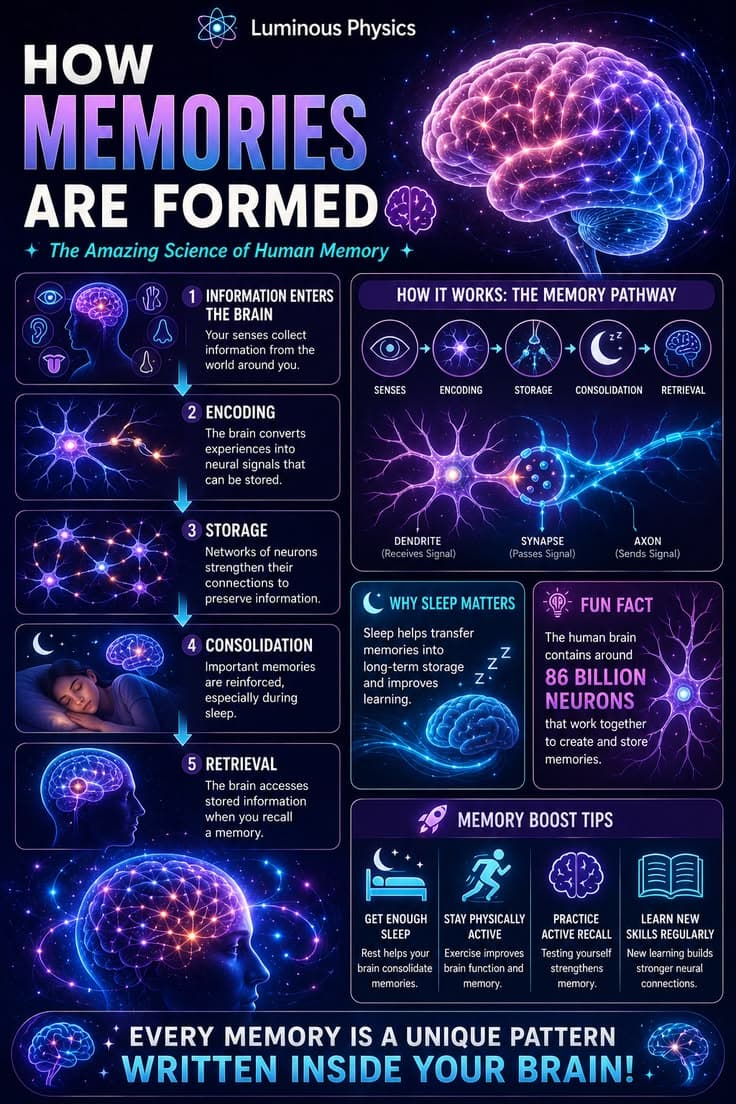
Memory is not a perfect video recording of life. It is an active process in which the brain receives information, gives it meaning, stores parts of it and later reconstructs it when we try to remember.
Attention matters at the beginning. When attention is divided, the brain has less useful information to encode, which can make later recall more difficult.
From experience to long-term storage
Encoding turns an experience into a pattern the brain can work with. Consolidation then helps stabilise that pattern over time. Sleep, repetition, emotional relevance and connections with existing knowledge can all influence how strongly something is remembered.
Retrieval is the act of bringing stored information back into awareness. Each retrieval can also update the memory, which is one reason memories can become clearer, weaker or slightly altered over time.
Practical ways to support memory
Use active recall instead of only rereading, space learning across several days, connect new ideas with familiar examples and protect regular sleep. Physical activity and stress management can also support attention and learning.